Today we drove about three hours from Dale, Ind., to Paducah, Ky. We loved passing through this pastoral part of the country with rolling bluegrass hills and fields of corn. And we were thankful to spend more time in the car because the temperatures increased to a sweltering 90 degrees. It was actually amusing because our first stop was in a kitschy Christmas-themed town called Indiana and my son said, "Mommy, I thought Santa lived in a cold place!"
Budget
Breakfast: free at hotel
Snacks: $9.10
Lunch: $37.33 (Moonlite Bar-B-Q)
Gas: $33.08
Dinner: $42
Hotel: $91.86
Total: $213.37
Highlights
1) Santa Claus, Indiana
In the middle of Indiana farm country, we found Santa Claus. The jolly man in a red suit was standing in front of a herd of grazing cows and a beautiful old red barn. Huh? We had stumbled upon America's Christmas Hometown.
"Mommy, I thought Santa had reindeer, not cows!" my son said.
In the winter, this town puts on a spectacular Christmas festival, or so we've heard, but in the middle of summer the only sights to see are the Christmas-themed businesses.
Every business, whether it's a golf course or a campground, has a Christmas theme.
We later saw a police man getting into this car. No his uniform wasn't red and green.
A Santa statue stands outside City Hall holding a big bag of presents. My daughter asked, "Do kids here get presents every day?"
Who knew? Santa shops at Dollar General. No wonder he can afford to give so many presents.
This town is home to the world's only post office with the Santa Claus name. The post office receives
thousands of letters addressed to Santa Claus every December and volunteer elves respond to answer each one, a tradition that has been going on since 1914.
Ornaments in the middle of June? Yes, they're sold year-round in Santa Claus, Indiana.
Have a Coke and a Santa.
By the time my kids and I bumped into this Santa outside the grocery store, I was singing carols—and they were shouting at me "Stop! You're embarrassing us!"
2) Moonlite Bar-B-Q, Owensboro, Ky.Jennifer Reese who writes the
Tipsy Baker blog recommended this spot for barbecue. She sent a few suggestions for restaurants along the Ohio River but this is the one place where she said we MUST stop—and so we did and we were not disappointed.
Owensboro, Ky., calls itself barbecue capital of the world and the Moonlite is its most famous establishment. In fact, this town probably gets its title from this restaurant.
We arrived at lunch when this big and busy restaurant rolls out a spectacular buffet: macaroni and cheese, green beans and bacon, buttery mashed potatoes, creamed corn, and lots and lots of barbecue...
Barbecued ribs, chicken, pulled pork, and beef brisket—all of it cooked perfectly over hickory coals until succulent and tender. And there's also the restaurant specialty: chopped mutton, which is mature sheep and has a richer, meatier taste than lamb. Mutton has been popular in the area ever since Welsh settled this area and raised herds of sheep.
So much to choose from...
The macaroni drowning in cheddar cheese and butter and sprinkled with paprika was my son's favorite.
We piled our plates with food...
and somehow found room for dessert. How could we resist?
3) Route 60, IndianaFrom Owensboro we crossed the river over to Indiana and stumbled upon this plaque indicating that Abraham Lincoln had made a speech here.
We stopped at the Marion Cafe in Marion, Indiana, because my husband needed a cup of coffee. Cute place but completely deserted.
Someone had fun decorating their garage with old signs.
4) Paducah, Ky.Paducah is a pretty town that sits on the banks of the Ohio. It's known for its art galleries, performing arts scene and the National Quilt Museum. One local told us that if it weren't for the 1937 flood that swept this town into the river, Paducah would be the size of Nashville today.
In Paducah we reconnected with the Ohio River. That meant more rock skipping.
Paducah has a vibrant art scenes and several theaters, and we found this entertainer, pretending to be Marilyn Monroe, on the street.
This is a photograph of Cynthia's, a restaurant that we couldn't afford—but we decided to photograph it anyway because the outdoor patio looked lovely. On a warm, Friday evening the Paducah restaurants were overflowing with people. We ended up at
Max's Brick Oven Cafe and were lucky to get in without a reservation.
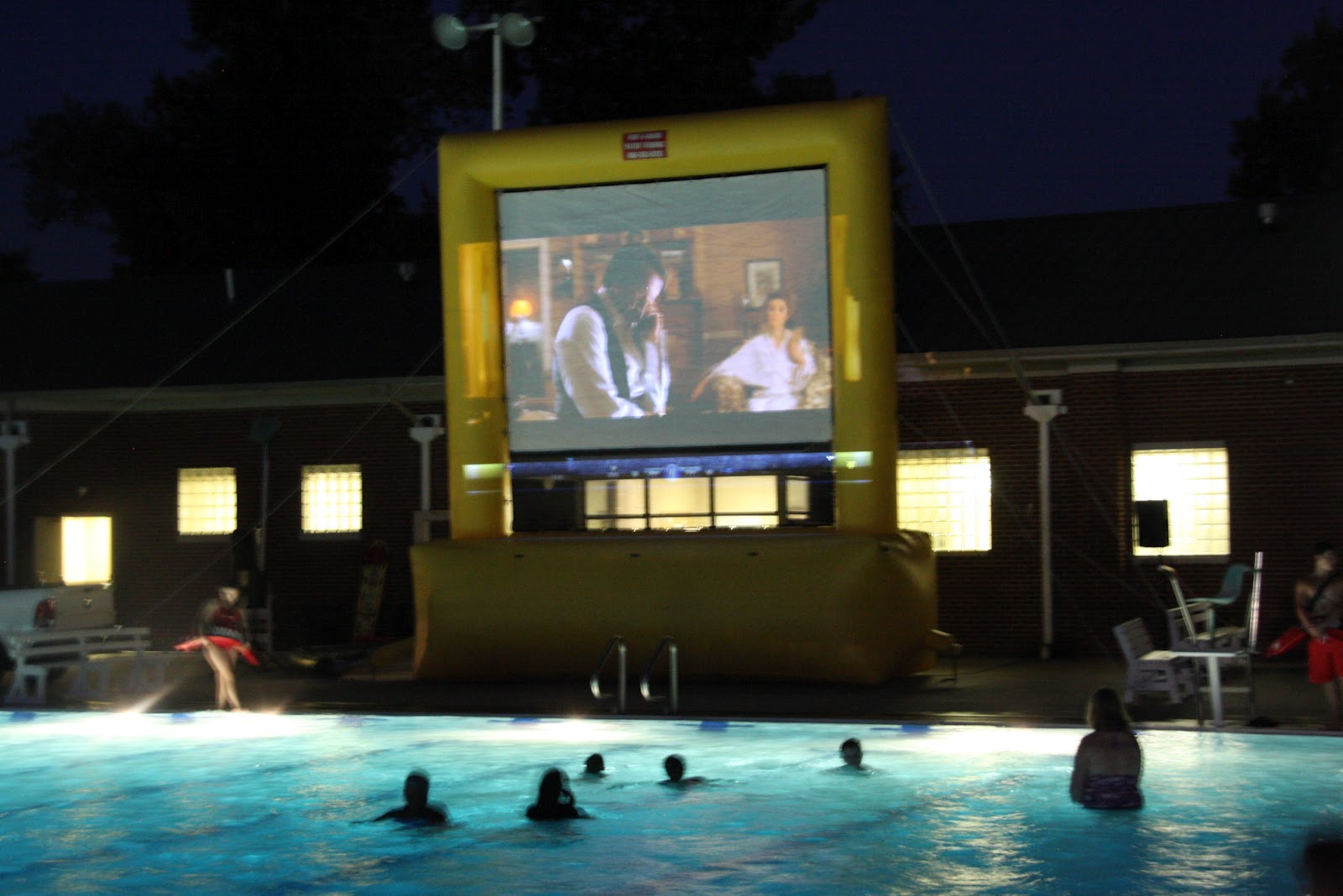
We spent the sweltering night cooling off in the town's public swimming pool and watching the movie
Hook on a giant inflatable screen.
What's up next? We're driving to Cairo, Ill., where the Ohio River meets the Mississippi.